




MASSIMO BATTAINI: HOW INNOVATION IS DRIVING EUROPE'S ENERGY TRANSITION
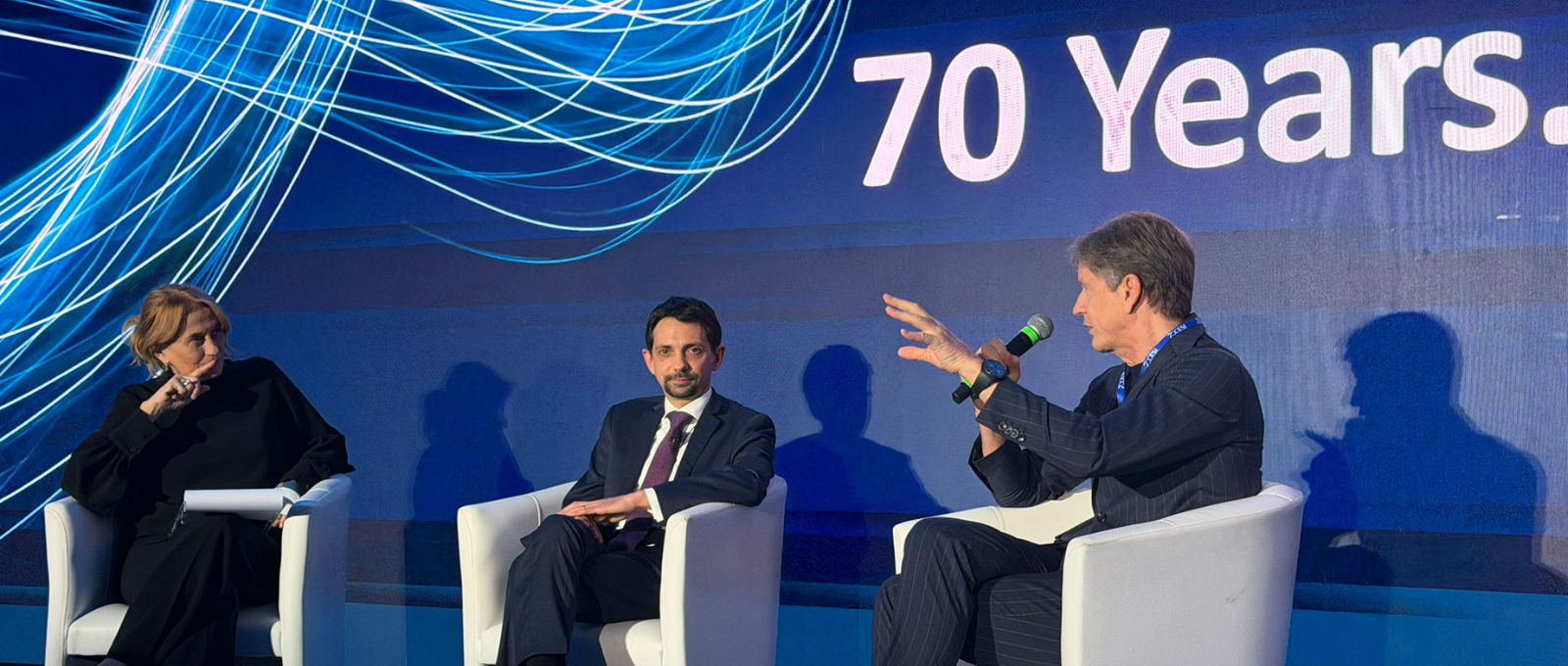
Massimo Battaini, CEO of Prysmian, speaking at the event marking the 70th anniversary of CESI: “The energy transition represents a continuous challenge. Renewable sources are intermittent and, in many countries, integrating them into the grid in a stable and reliable way is not easy. Renewable energy is often generated far from where it is needed and not always at the right time. Europe offers some success stories, such as the North Sea, where offshore wind has become a fully competitive energy source — but it requires significant effort. This demonstrates how essential innovation is to enable the production of systems that are increasingly competitive not only in terms of power demand but also in terms of cost efficiency. In recent years, for example, we have increased transmission capacity from 1 GW to 2 GW. Progress like this will make the development of increasingly complex infrastructure more sustainable, including from a financial perspective.”
“But the transition is not only about energy generation: it also depends on smarter energy use in homes, industries and the service sector. Cities, buildings and data centres must all become active components of the energy system, able to manage the balance between production and consumption. Digital transformation also plays a central role. Companies such as Microsoft and Amazon generate an ever-growing volume of data, and innovation is needed to ensure that this digital transformation is sustainable, fast, reliable and secure.”
“We often focus on the electrical part of the cable, but we should not forget that installation also requires innovation. Cables are manufactured in controlled environments, but their installation is an extremely demanding challenge, especially when dealing with strategic infrastructure, often underwater or in highly complex settings.”
“The rapid expansion of solar energy in Europe also requires new interconnections with regions such as North Africa. For us, connecting these areas to Europe has meant crossing stretches of sea reaching depths of 3,000 to 4,000 metres. This is why new marine technologies and new cable-laying systems capable of operating at such depths have been developed. To protect cables from potential risks, they are not simply laid on the seabed; real trenches are created, allowing cables to be buried 300 to 400 metres below sea level to prevent sabotage.”
“Our collaboration with CESI is fundamental, because this boom in demand for submarine and land cables and systems has essentially emerged over the past five years. To keep pace with this acceleration, the entire value chain — industry, institutions and training systems — has had to invest in innovation, capacity and skills. Schools and training centres are adapting, as the expertise required today is radically different from 30 years ago. CESI has enabled us to respond quickly to this demand. Technologies evolve rapidly, and we need flexible, dynamic competencies able to evolve alongside them.”